Somebody replacing a garage door in Chula Vista usually lands on the same fork: a carriage house overlay or a modern flush panel. Both mount on the same sectional door underneath, so the choice is really about the face, not the mechanism. West of Interstate 805 the older stock leans toward overlay by default. East in Eastlake or Otay Ranch, flush panels show up more on newer builds. Neither reads as wrong, but they photograph and age differently once the door is actually hanging.
What Carriage House Overlay Means
Carriage house overlay bolts raised panel sections and strap hinges onto a standard sectional door to suggest the swinging coach doors a barn or old carriage house once used. None of the hardware swings or unlatches. It sits flush against the same door that rolls up on tracks, adding depth and a shadow line where the panel edges catch the sun. The look borrows from a form the door no longer performs, which is exactly the trade a buyer is making.
What A Flush Panel Is
A flush panel door skips the applied hardware and raised sections entirely. The face stays one plane, sometimes broken by a few wide horizontal grooves pressed into the steel or aluminum. No shadow line, no strap hinge, no hasp standing off the surface. That reads as newer construction and pairs cleanly with the stucco and simple trim common on the master-planned streets in Otay Ranch or Rolling Hills Ranch, where the rest of the house is already plain-faced.
How The House Decides It
A house with some texture near the garage opening, older stucco or a bit of stone veneer on a street off Third Avenue or Hilltop Drive, tends to carry a carriage house overlay well because the raised panels give the eye something to match. A flatter, more recent facade in Eastlake or Sunbow usually looks better with a flush face, since there is no competing detail for the applied hardware to argue with. The mismatch shows up fastest on a corner lot, where both sides of the door face the street.
Where Glazing Changes The Read
Glazing sits differently on each style. A carriage house door usually breaks its glass into small panes set inside the raised panel grid, echoing an old coach window, which reads traditional even on a fairly plain house. A flush panel tends to run one long band of glazing across the top, which reads current and puts the visual weight on the opening itself rather than on applied trim. A buyer picking window count and shape is really picking which era the door is pretending to be.
Hardware That Actually Moves
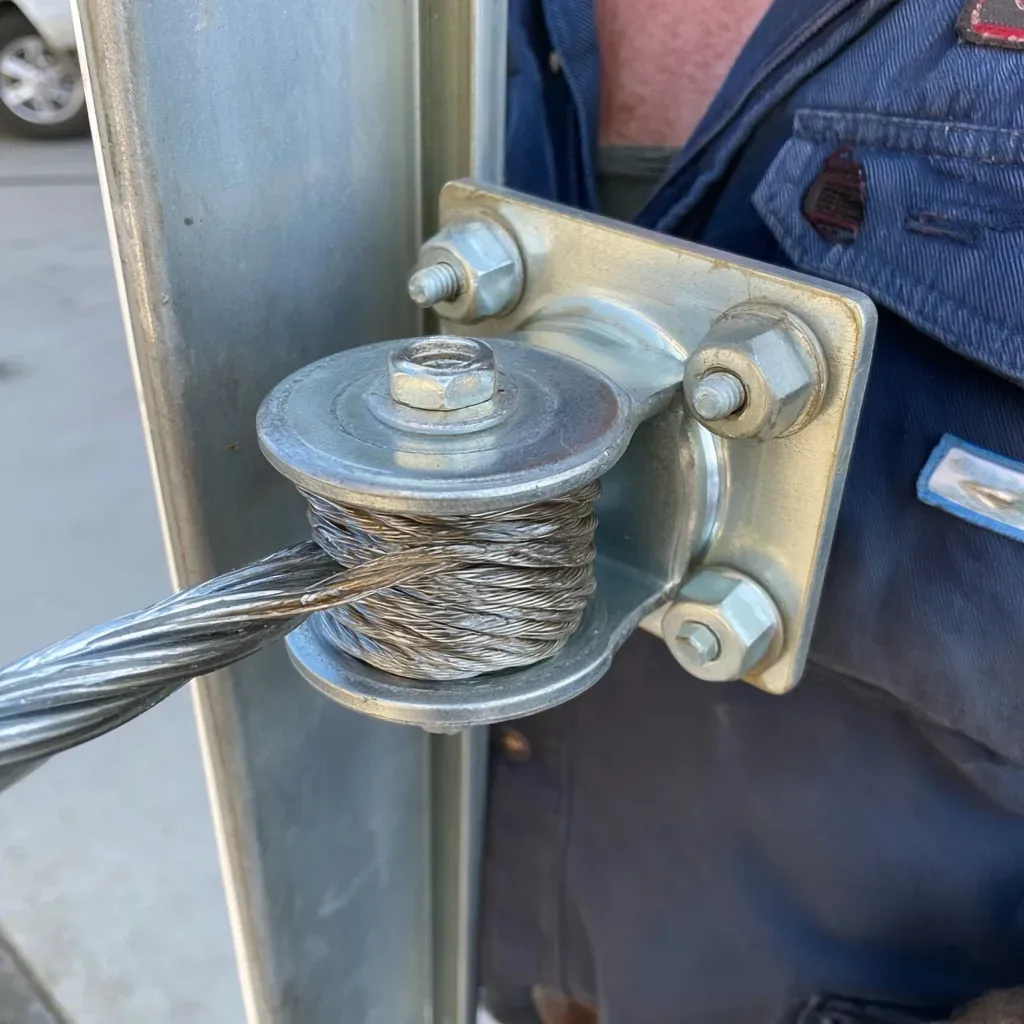
The strap hinges and hasps bolted across a carriage house face do no lifting. They are trim, fastened flat to a panel that never opens on its own. The torsion spring, the lift cables, the rollers and the bottom brackets are doing the actual work underneath, and that hardware is identical whether the face above it is overlay or flush. A homeowner comparing samples in a showroom is comparing two skins over the same lifting mechanism, not two different ways of opening a garage.
Architectural Review Can Apply
A door going up in Eastlake, Otay Ranch or another master-planned community east of Interstate 805 may need to clear that community's architectural review committee first, since color, style and material changes there run through each association's own CC&Rs rather than city code. There is no single HOA covering the whole east side, so the approved palette in one Otay Ranch sub-association will not match the next one over. West of the interstate, older infill streets near Third Avenue Village do not carry that layer of review at all.
Weather Treats Both Alike
Chula Vista weather treats a carriage house overlay and a flush panel about the same, since both are steel underneath and the finish riding on top doesn't change what the sun and moisture do to hinges and rollers. What differs is upkeep on the trim itself: strap hinge accents and raised overlay pieces near the bay corrode faster in the seams than a flat surface does, simply because there's more edge for moisture to sit in.
Insulation Is Its Own Decision
Insulation tier rides separately from panel style, and nothing about a flush face or an overlay changes what the door is worth thermally. A garage backing onto a busier stretch near Palomar Street or Main Street may call for a thicker core mainly to cut noise, while a detached garage further from traffic may not need it at all. A buyer should pick the face for how it looks and pick the core, separately, for what the garage sits next to.
Resale And Buyer Expectations
Resale is where the two styles actually pull apart. A carriage house front photographs as an upgrade on a listing in Rancho del Rey or Bonita, where overlay doors already outnumber flush ones on the block, so a buyer's eye reads it as move-in ready. In newer sections of Otay Ranch or Millenia, where flush faces are already the norm, a carriage house door can look like it is trying too hard against a street of plainer neighbors. Matching the block usually beats personal preference on a resale photo.
Cost Differences Worth Knowing
Carriage house overlay costs more than a comparable flush panel because of the extra hardware and the labor to fit raised sections evenly across the face. The gap is not huge on a standard single or double door, but it grows on wider two-car openings common in Eastlake and Rolling Hills Ranch, where more panel area means more strap hinges and hasps to install. A homeowner pricing both should ask for the same insulation core and glazing package on each quote before comparing the numbers.
Matching The Style To The House
Neither style is the wrong call by itself. What the licensed pros we connect you with tend to notice is a mismatch: a flush panel on a street full of overlay trim in Eastlake, or heavy carriage hardware bolted onto a plain 1960s stucco place west of Interstate 805. Match the shadow lines already on the block and the neighboring rooflines, and either door reads as though it belongs there.
Dealing with this in your home?
West of I-805, streets near the Sweetwater River still carry bay moisture inland, and hardware there corrodes faster than a spec sheet predicts. East toward Eastlake and Otay Ranch, the same bracket lasts years longer since the air stays dry. Chula Vista homeowners should match spring and roller grade to which side of that line they live on.