Pulling the red emergency release cord is supposed to hand the door back to you, disconnecting it from the opener so it moves on its own track hardware. In Chula Vista, from Third Avenue Village to the streets off Otay Lakes Road, the moment that reveals a real problem is right after: the door is now in manual mode, nothing mechanical is stopping it, and it still will not lift past a few inches.
Why The Opener Gets Blamed First
Most homeowners assume the motor unit has failed, since that is the part that normally does the lifting. But once the release is pulled, the opener is out of the picture entirely. What is left holding the door's weight is the torsion or extension spring system, and a door that suddenly needs real strength to move even slightly is telling you that system has stopped doing its job.
What A Broken Spring Feels Like
A working spring makes a two-car door feel close to weightless in manual mode, light enough to lift with one hand past waist height. A broken spring turns that same door into dead weight, often too heavy to raise more than a foot before your arms give out. That gap between expected and actual effort is the clearest sign available without opening a single panel.
The Balance Test, Done Safely
With the opener disconnected, lift the door about halfway and let go. A balanced door with intact springs stays roughly in place. A door that slams down or rockets upward has a spring problem, full stop. Keep hands clear of the track and the springs themselves during this test, and never test a door that has already dropped and jammed partway.
Torsion Versus Extension Hardware
What the door looks like inside changes what failed. Newer construction east of Interstate 805, including Eastlake and Otay Ranch, runs torsion springs mounted on a bar above the opening. Older west-side homes near Third Avenue or Palomar Street more often carry extension springs stretched along the horizontal tracks. Both fail the same way in the end, just from different hardware and different histories.
When The Door Won't Move At All
Sometimes the door will not move even an inch in manual mode, not heavy so much as frozen. That points past the spring to something binding the rollers or tracks, or a cable that has come off its drum. Forcing a door that will not slide, rather than one that is simply hard to lift, risks bending the track or pulling a bracket loose from the header.
Stop Before Something Gives
If a door fights you hard in manual mode, stop pulling. A spring under partial tension can still let go the rest of the way while someone is wrestling with it, and a cable already frayed near the bottom bracket can snap under the extra load a person adds. The safest move once you've confirmed the weight is wrong is to leave the door exactly where it sits.
Securing An Open Door Overnight
A door stuck partway up or down is a security gap until it's fixed. C-clamps on the track just below the bottom roller on each side keep the door from sliding further while it waits for repair. This holds through a Chula Vista evening without anyone forcing the door again, though it is not a fix, just a way to leave the house without an open garage facing the street.
Salt Air And Cable Condition
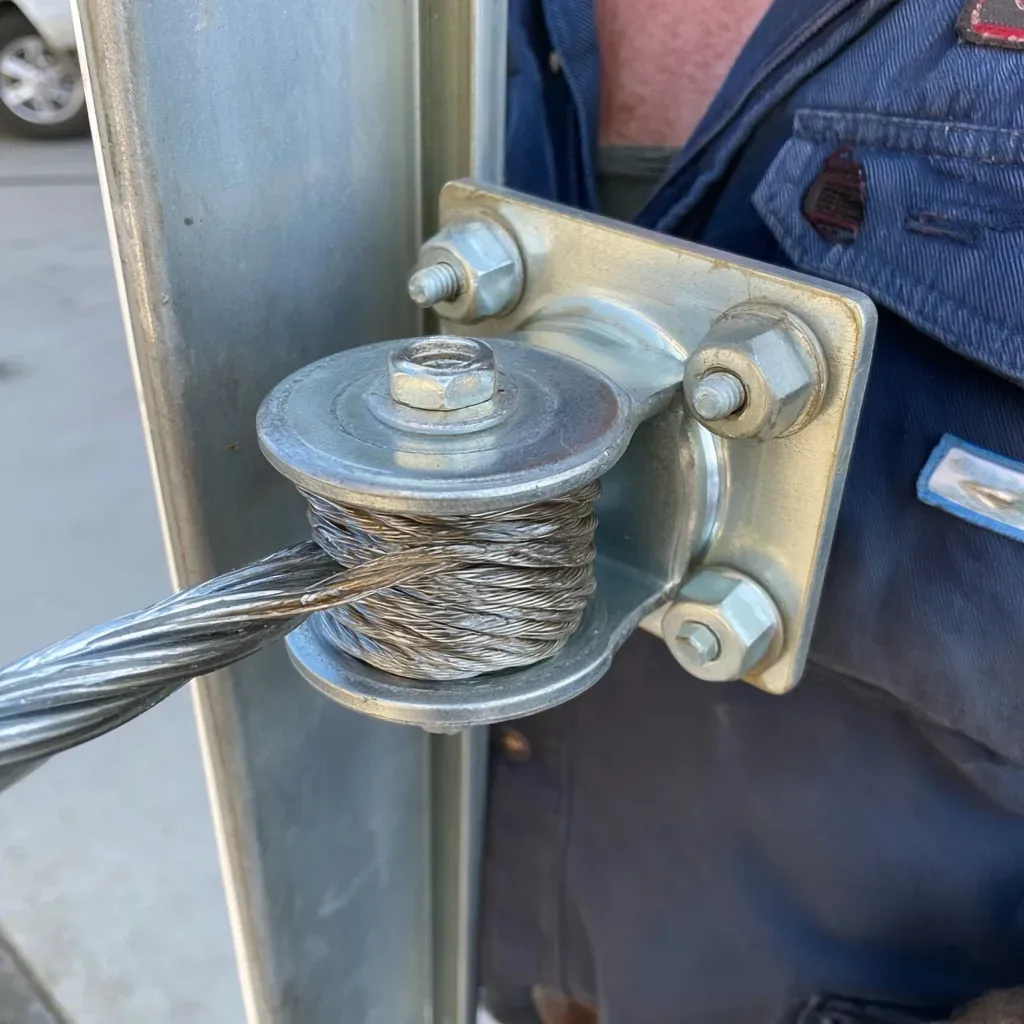
Homes within a mile or so of the Chula Vista Bayfront or the marina see lift cables corrode from the inside of the strand outward, under the galvanized coating, long before the outside looks rough. A cable in that zone can look fine and still be the reason a door dropped weight unevenly on one side. Farther inland, toward Rolling Hills Ranch, spring fatigue from cycle count matters more than corrosion.
What The Weeks Before Usually Showed
Cycle count is the real driver behind spring failure, more than any single dramatic event. A garage near Rohr Park or off Hilltop Drive that opens for a morning commute and again for an evening return puts a fixed number of lifts on the coil every year, and that number adds up faster in a household with a home office or teenagers coming and going. Older extension springs on the pre-1970s streets west of I-805 tend to reach that ceiling sooner than torsion setups out toward Eastlake.
Getting A Straight Answer On The Part
California does not require a specific state license category naming garage door spring work, so there is no number to check before someone touches the bar. Ask instead whether the spring size and cycle rating match the door's weight, and whether both springs get replaced together when one has failed, since the second one on an older door is usually close behind.
Living With It Until It's Fixed
None of this points to bad timing when a spring finally lets go on an ordinary afternoon. It means the coil had been thinning out for months, maybe years, and whatever lift it happened to fail on near Otay Ranch or off Bonita Road was simply the one it couldn't finish. Salt air closer to the bay can pit the coils faster than the same hardware would wear out in Rancho Bernardo or Santee, but age and use account for most of what finally gives.
Dealing with this in your home?
West of I-805, streets near the Sweetwater River still carry bay moisture inland, and hardware there corrodes faster than a spec sheet predicts. East toward Eastlake and Otay Ranch, the same bracket lasts years longer since the air stays dry. Chula Vista homeowners should match spring and roller grade to which side of that line they live on.