The question shows up standing in a Chula Vista driveway, hand on a warm steel panel, wondering if a thicker door would change anything inside. Near San Diego Bay the answer leans one way, and a few miles inland off Otay Lakes Road it leans another. Nobody here is fighting a furnace bill. What they are usually fighting is a shared wall that runs warm, a door that bakes all afternoon, or a garage loud enough to hear through the house.
What R-Value Really Covers
R-value describes how slowly heat moves through the panel core, nothing about the gaps around it. On a garage that backs into a bedroom wall, a higher number keeps that wall from tracking whatever the door is doing outside. On a detached garage out past Heritage Road with nothing living behind it, that same number changes very little day to day, since there is no room on the other side asking for comfort.
Polystyrene Or Poured Urethane
Most insulated doors use one of two cores. A polystyrene slab gets cut to size and dropped into the panel, giving a moderate R-value at a lighter weight and a lower price. A poured urethane core bonds to both steel skins as it cures, filling the panel completely and pushing the R-value higher, along with the price and the added pounds the springs will need to carry once it goes up.
Where A Workshop Actually Gains
A garage used to park a car and hold a few bins does not need insulation to stay livable, since nobody occupies it long enough to notice a swing in temperature. The math changes for a converted workshop or a room with a mini fridge and a workbench that gets real use, where a west-facing door in direct sun through the afternoon can turn that space uncomfortable well before evening.
What Insulation Does Not Fix
A better core slows heat coming through the panel itself, but it does nothing about air moving around it. A bottom seal flattened by years of contact, or side weatherstripping that has pulled away from the track, lets outside air in no matter what the door is made of. Fixing those two spots first is usually the cheaper move, and sometimes the only one a garage actually needed.
The Weight The Core Adds
Steel wrapped around a poured core weighs noticeably more than the single layer of steel it replaces, and that difference is not small on a full-size residential door. The extra pounds sit in the panel permanently, which means every part built to lift that door needs to be sized for what is actually hanging in the opening, not for the lighter door that used to be there.
Springs Sized For New Weight
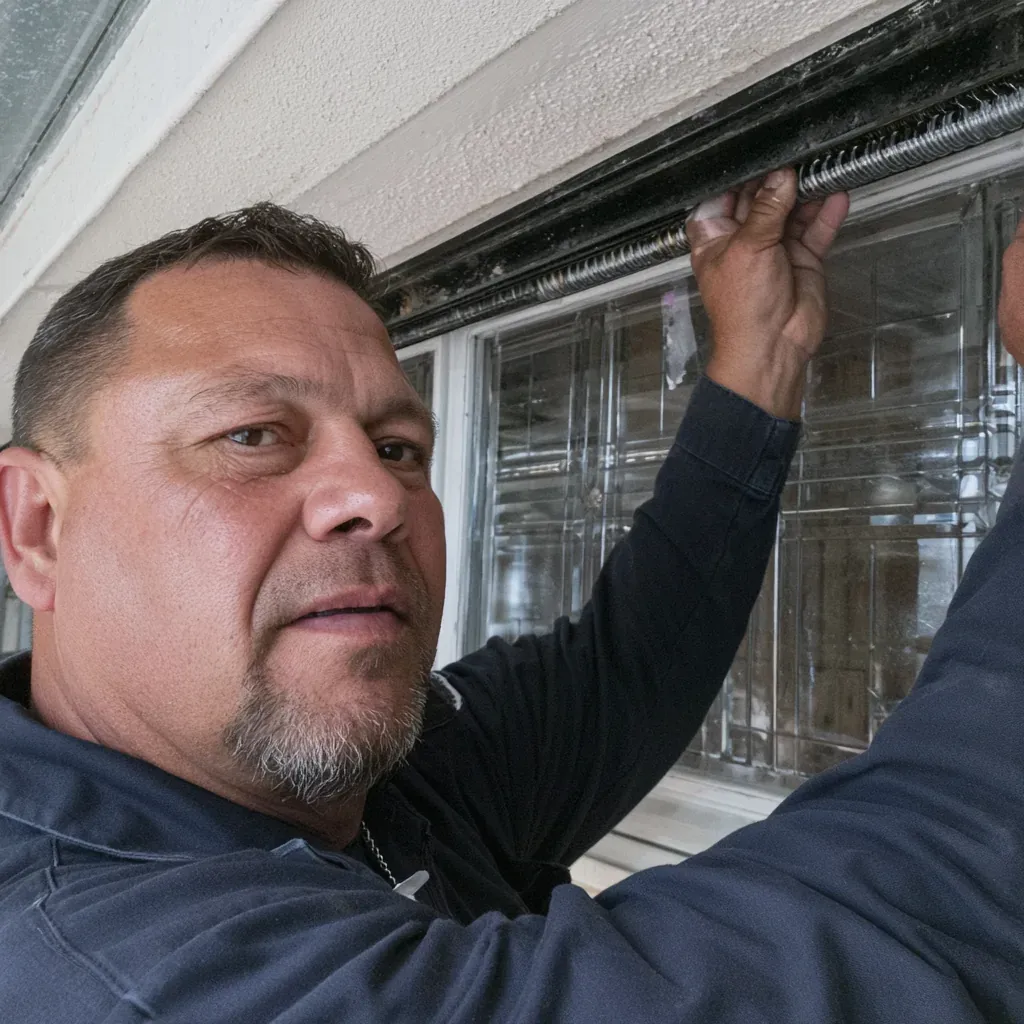
Torsion springs carry the door's weight through a shaft above the opening, and they are wound to match a specific range of pounds. Swap in a heavier insulated door without changing that spring and the door gets harder to lift by hand, closes faster than it should, and wears the opener drive down sooner than it would otherwise. A shop sizing new springs has to measure the door going in, not the one coming out.
Openers Absorbing Extra Weight
The opener was never meant to lift a door by itself. It was set up to nudge a door the springs already balance most of the way. Add a heavier insulated slab on top of springs still wound for the old panel, and the opener starts absorbing weight it was never built to carry, which shows up first as a slower close and later as a burned-out drive gear.
Wide Doors Show It Most
A wide double door feels the added weight more than a narrow single ever would, and Chula Vista has plenty of both. A three-car home in Eastlake or Rolling Hills Ranch carrying a 16-foot insulated door needs a meaningfully different spring setup than a single opening on an older block near Third Avenue, where the panel is smaller and the weight difference barely registers.
Weighing Price Against Comfort
The honest tradeoff is a higher price and springs rated for more weight, against a garage that runs a little cooler on a west-facing wall and a little quieter when the door goes up and down. That is a real gain for a converted workshop or a bedroom sharing a wall with the garage. It is a smaller gain for a garage near the Sweetwater River that mostly holds a car and a kayak.
Questions Worth Asking First
Ask whether the door being quoted has a polystyrene or a poured urethane core, since the price gap between them is usually about more than a number on a spec sheet. Ask whether the spring set is being sized for that specific door's finished weight or carried over from whatever was already installed. And ask what the bottom seal and side weatherstripping look like before assuming the door itself is the whole problem.
What Actually Decides It Here
A garage close to the Chula Vista Marina deals with salt air working into hardware faster than heat working into panels, so insulation solves a different problem than the one usually causing trouble there. Further inland toward Otay Ranch, sun exposure on a west-facing door matters more than anything carried on the breeze. Looking at the specific wall, direction, and distance from the water tells more than any general rule.
Dealing with this in your home?
West of I-805, streets near the Sweetwater River still carry bay moisture inland, and hardware there corrodes faster than a spec sheet predicts. East toward Eastlake and Otay Ranch, the same bracket lasts years longer since the air stays dry. Chula Vista homeowners should match spring and roller grade to which side of that line they live on.