Stand under a door that will not budge anywhere from Third Avenue to Otay Ranch, and the hardware overhead answers the first question before a phone gets dialed. Newer construction east of Interstate 805, Eastlake and Rolling Hills Ranch among them, was built almost entirely on torsion hardware. Older single-car openings west of the 805, some alley-loaded, more often carry extension springs, and a fair number of those still have no containment cable at all.
What A Torsion Spring Does
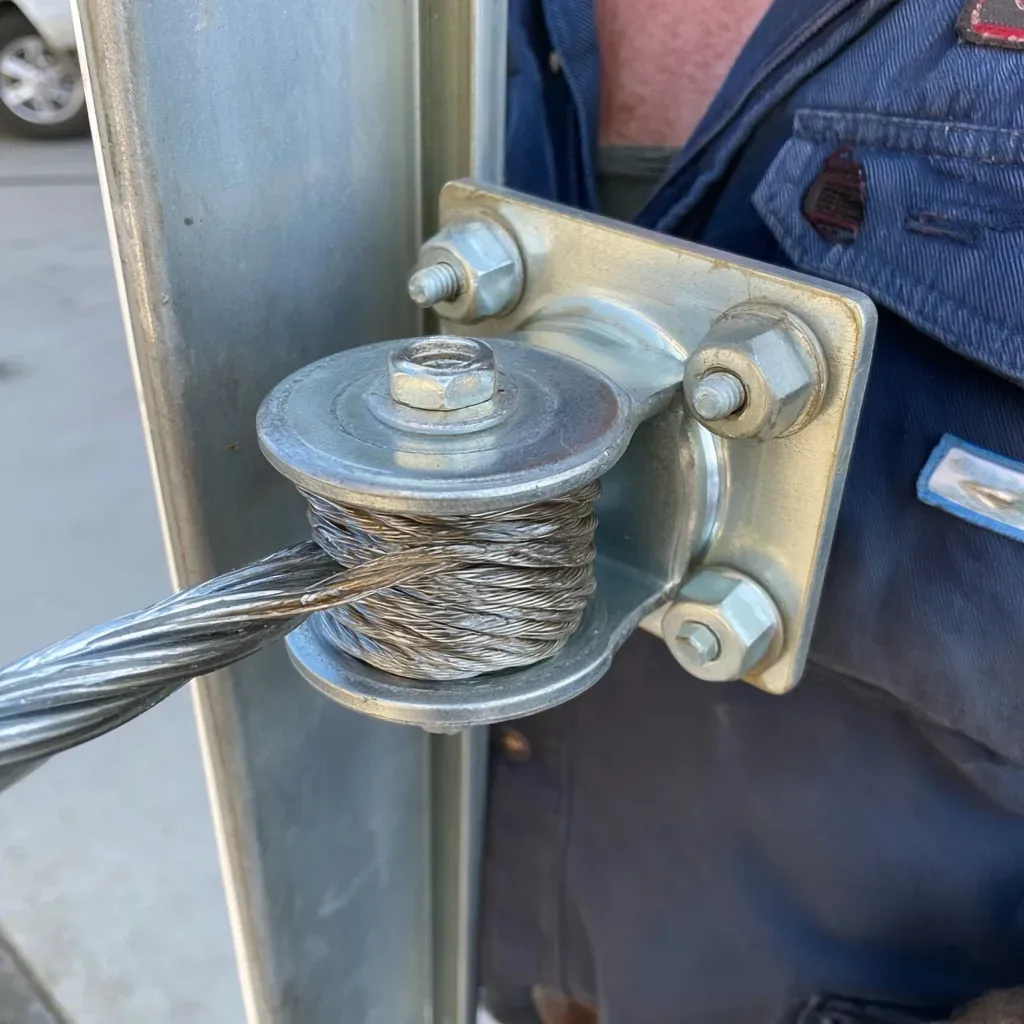
A torsion spring winds around a shaft mounted above the closed door, centered over the opening, with cable drums bolted to each end. As the door lowers, the shaft unwinds and lets the cables feed out; as it rises, the shaft rewinds and takes the cable back up. One or two springs share the load depending on door weight, and a center bearing plate keeps the shaft turning true instead of wobbling under the strain.
What An Extension Spring Does
An extension setup mounts one spring on each side above the horizontal track, stretching lengthwise as the door travels down instead of winding around a shaft. A pulley near the back of each track routes the cable from the spring to the bottom corner of the door. Older Chula Vista homes west of the 805, especially the smaller pre-1970s stock, are where this system still turns up most often.
Where Headroom Comes In
A torsion shaft needs several inches of clear space above the track to mount the drums and center bearing plate. Newer Eastlake and Otay Ranch garages, built with two and three-car torsion openings from the start, generally have that room already accounted for. Older alley-loaded garages closer to Third Avenue Village sometimes do not, which is part of why extension springs stuck around there rather than getting swapped out.
Why The Safety Cable Matters
The safety cable is a separate line run through the coil of an extension spring, bolted to the framing above the track rather than to the spring's own hardware. Its job is containment, not lift: if a corroded coil lets go, the cable keeps broken metal from traveling across a Chula Vista garage instead of pulling free with it. West-side homes near Third Avenue Village on older extension setups often went in before this cable was standard practice, which is the gap worth checking before touching anything else.
The Feel Of Each Lift
A torsion system tends to lift and lower with a steadier, more even pull, since the shaft delivers roughly the same counterweight from fully open to fully closed. Extension springs stretch hardest right at the top of their travel, so the door can feel heavier partway up and lighter again near full open. Neither feel signals a problem on its own, but a sudden change from the usual pull is worth paying attention to.
What Replacement Runs
Torsion spring replacement costs more up front because the shaft, cable drums, and center bearing all have to come apart, and winding the new spring to the correct tension takes a steady hand. Extension spring replacement is typically the cheaper of the two jobs, with less disassembly involved. Either estimate should be treated as a range rather than a fixed number, since door weight and spring count both move the total.
When High Cycle Pays Off
A door cycled harder than average burns through spring life faster regardless of which system carries the load. A rental near Otay or a garage converted into workshop space off Heritage Road sees far more open-close cycles in a year than a typical single-family door. In those cases a higher cycle-rated spring, torsion or extension, tends to earn back its extra cost well before the standard-rated version would have needed replacing anyway.
Door Weight Sets The Size
Spring type matters less than door weight when it comes to sizing either system correctly. An insulated door on a garage converted to a workshop or gym, which turns up more often east of the 805 in Eastlake and Otay Ranch than in the older west-side stock, needs a spring rated for that added weight. A spring sized for the original lighter panel wears out fast and can strain the opener trying to compensate.
Salt Air And Coastal Wear
Chula Vista does not deliver a hard freeze, so a torsion shaft or an extension coil here fails on a different clock: cycle count, corrosion and plain age. A door opened and closed at the same address for years has worn through its rated lifts and the spring gives back less lift than it once did. Near Chula Vista Bayfront that wear shows up sooner, since salt air pits the coil and thins the cable before the count alone would explain it.
Which One Is Worth Switching To
Converting an older extension system to torsion usually comes up when a door near Broadway or Hilltop is already getting a full spring replacement anyway, since the labor overlap makes the upgrade cheaper than doing it as a separate job later. It is worth asking about mainly on garages that already have the headroom, since retrofitting a shaft where there is none adds real cost to what would otherwise be a straightforward swap.
Which System Belongs On Your Door
Look up first. A torsion setup runs one solid shaft across the header above the door, riding on a center bracket with a cable drum and pulley at each end, and it needs several inches of headroom to fit. An extension setup instead runs a spring along each horizontal track, stretching and relaxing as the door travels, with no shaft at all. Homes toward the older west side, some alley-loaded off Third Avenue, are the ones still likely to have extension springs without a safety cable threaded through the coil.
Dealing with this in your home?
West of I-805, streets near the Sweetwater River still carry bay moisture inland, and hardware there corrodes faster than a spec sheet predicts. East toward Eastlake and Otay Ranch, the same bracket lasts years longer since the air stays dry. Chula Vista homeowners should match spring and roller grade to which side of that line they live on.