The question tends to surface after someone measures the ceiling and realizes a standard opener rail has nowhere to travel. It happens most in Eastlake and Otay Ranch garages finished out for a home gym or workshop, and in older houses on the west side where a low roofline was never built with an overhead opener in mind. Either way, the fix isn't a smaller opener. It's a different kind of opener that doesn't need the ceiling at all.
What A Jackshaft Opener Is
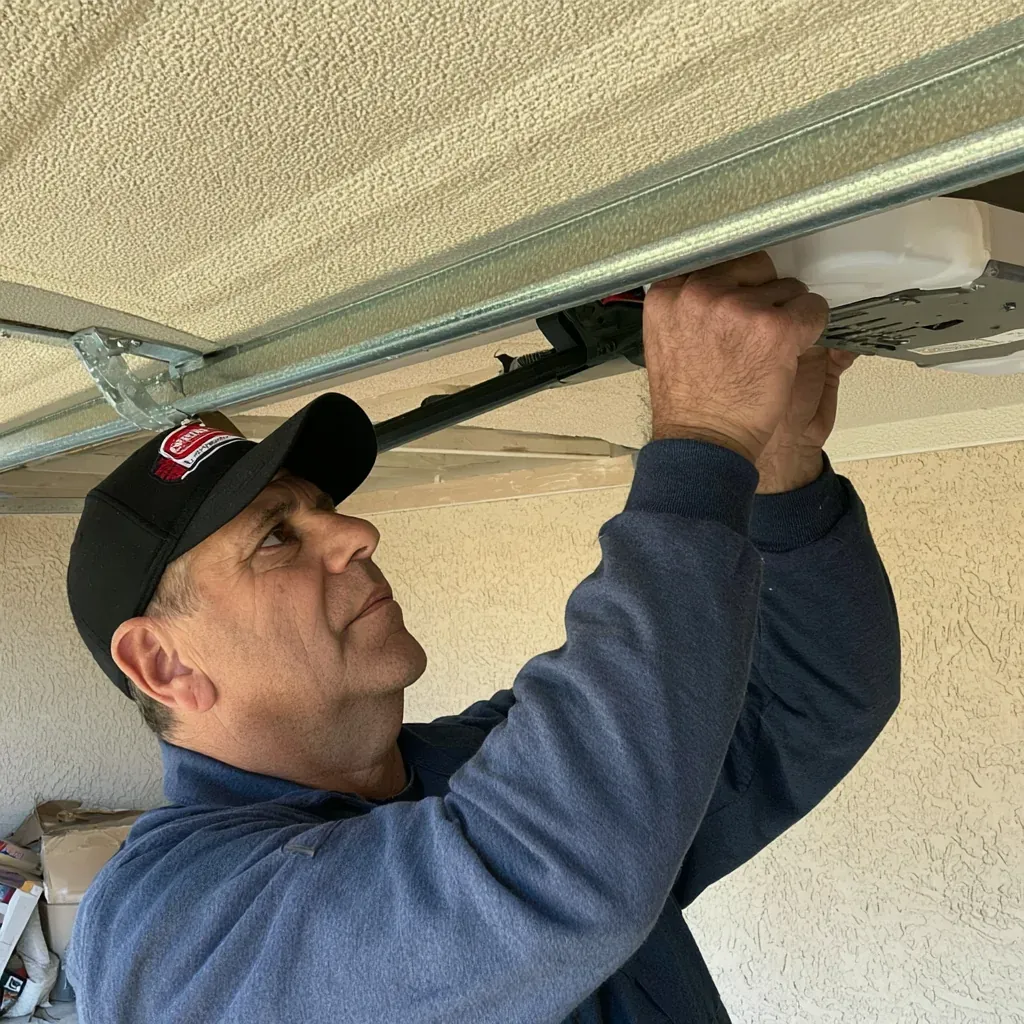
A jackshaft opener runs on the torsion shaft above the door instead of a rail overhead, so nothing hangs down from the ceiling into the path a vehicle would clear. Eastlake garages with a two-car opening often gain headroom this way, and homes near Sweetwater Road with a high-lift track already installed can convert without touching the framing. The motor mounts to the wall beside the header, driving the shaft directly rather than pulling a chain across it.
Why Headroom Forces The Choice
A ceiling-mount opener needs clearance for the rail to travel and the bracket to sit flush. Chula Vista homes with a finished garage ceiling, or a false beam added for storage, sometimes lose that clearance entirely. Older alley-loaded houses near Third Avenue and the west-side streets can run shallow in the same way, since they were framed before anyone assumed a motorized opener would go in. When the ceiling won't give up the room, the opener has to move somewhere else.
What High-Lift Track Changes
High-lift track changes where the door sits when it's open, not just what opens it. Instead of curving flat close to the ceiling a few inches up, the panel rides higher on a taller vertical section before it levels out. That's common on doors raised to clear a lifted truck or a boat trailer, which shows up around Otay Ranch and the hillside lots east of Proctor Valley Road. The taller track eats the same ceiling space a rail-driven opener needs, which is exactly why the two problems tend to arrive together.
How A Conversion Works
A conversion means removing the old ceiling rail and its mounting bracket completely, then bolting the jackshaft operator to the wall next to the torsion shaft. The motor couples to the shaft through a sprocket and belt, so it spins the shaft instead of dragging a trolley overhead. The springs, cables, and drums stay where they are. What changes is how the door gets its power, not how the door itself is built or balanced.
Torsion Shaft Condition Matters
Because a jackshaft unit turns the torsion shaft directly instead of pulling a rail, that shaft has to spin true. A shaft that's bent, pitted from age, or already carrying uneven spring tension will fight the new motor instead of working with it. Salt air off San Diego Bay speeds up that pitting on garages near the Chula Vista Bayfront and the marina, so a shaft inspection before the swap matters more there than it does further inland.
Where This Shows Up Locally
This comes up most in finished garages through Eastlake and Rolling Hills Ranch, where three-car openings under architectural review sometimes got a dropped ceiling for insulation or storage racks. It also shows up in Otay Ranch homes with lifted trucks needing high-lift track, and occasionally in condos with shared podium parking near Millenia, where structural beams sit lower than a typical single-family garage.
What A Conversion Costs
What the job runs depends on how much else changes alongside it. Swapping a wall-mount unit onto a door that already fits its opening, with a torsion shaft in good shape, costs less than a job that also needs new high-lift track or shaft replacement. Add a stripped-out ceiling bracket that needs patching, or an electrical run that has to be extended, and the price climbs from there. Getting a firm number means having the garage looked at rather than guessing from a phone call.
Weight And Balance Don't Change
A jackshaft conversion changes nothing about the door's weight or the load the torsion springs carry to hold it level. Homes wired for it around Bonita and Rolling Hills Ranch tend to share an install date, so if the springs have been on the shaft since the house was framed, they are due whether or not the opener above them changes. Ask the licensed pros we connect you with to check spring wear at the same visit, since the shaft has to come off partway to mount the new unit anyway.
Battery Backup Still Applies
A wall-mount jackshaft opener can carry battery backup the same as a ceiling unit, and California requires that function on openers manufactured for sale or installed in the state from mid-2019 onward under Senate Bill 969. It's worth asking about regardless of the law, since a dead opener during a Santa Ana-driven power blip is the kind of thing nobody notices until the door won't budge.
New Wiring Is Electrical Work
A jackshaft opener mounts where a ceiling unit never needed a plug, and that wall location often sits nowhere near an existing outlet. Running a new circuit or extending one over to the mounting point is electrician's work, not something bundled into the opener installation itself. It's worth asking upfront whether the garage's current wiring reaches the new spot before the old rail even comes down.
What This Guide Leaves Open
A jackshaft is worth pricing out when a garage ceiling has been finished over, when high-lift track leaves no clearance for a rail above the door, or when a remodel near the Chula Vista Bayfront or along Fourth Avenue calls for parking overhead storage where a trolley rail used to run. Changing the header or how the track anchors can fall outside a simple opener swap, so scope matters before anyone touches the shaft.
Dealing with this in your home?
West of I-805, streets near the Sweetwater River still carry bay moisture inland, and hardware there corrodes faster than a spec sheet predicts. East toward Eastlake and Otay Ranch, the same bracket lasts years longer since the air stays dry. Chula Vista homeowners should match spring and roller grade to which side of that line they live on.